
The full pitch
Demand waiting for a grid connection is measured in the hundreds of gigawatts, and a new high-voltage connection takes 5 to 15 years, with connection dates landing in the 2030s. Hospitals, depots, industrial sites and data-hungry facilities cannot wait that long for clean, continuous power.
Fuel cells have run for decades. Fleet software has run for decades. The gas network sits under every street. What is missing is end-to-end delivery: nobody owns the whole problem, so the customer is still waiting. hygrid exists to own it.
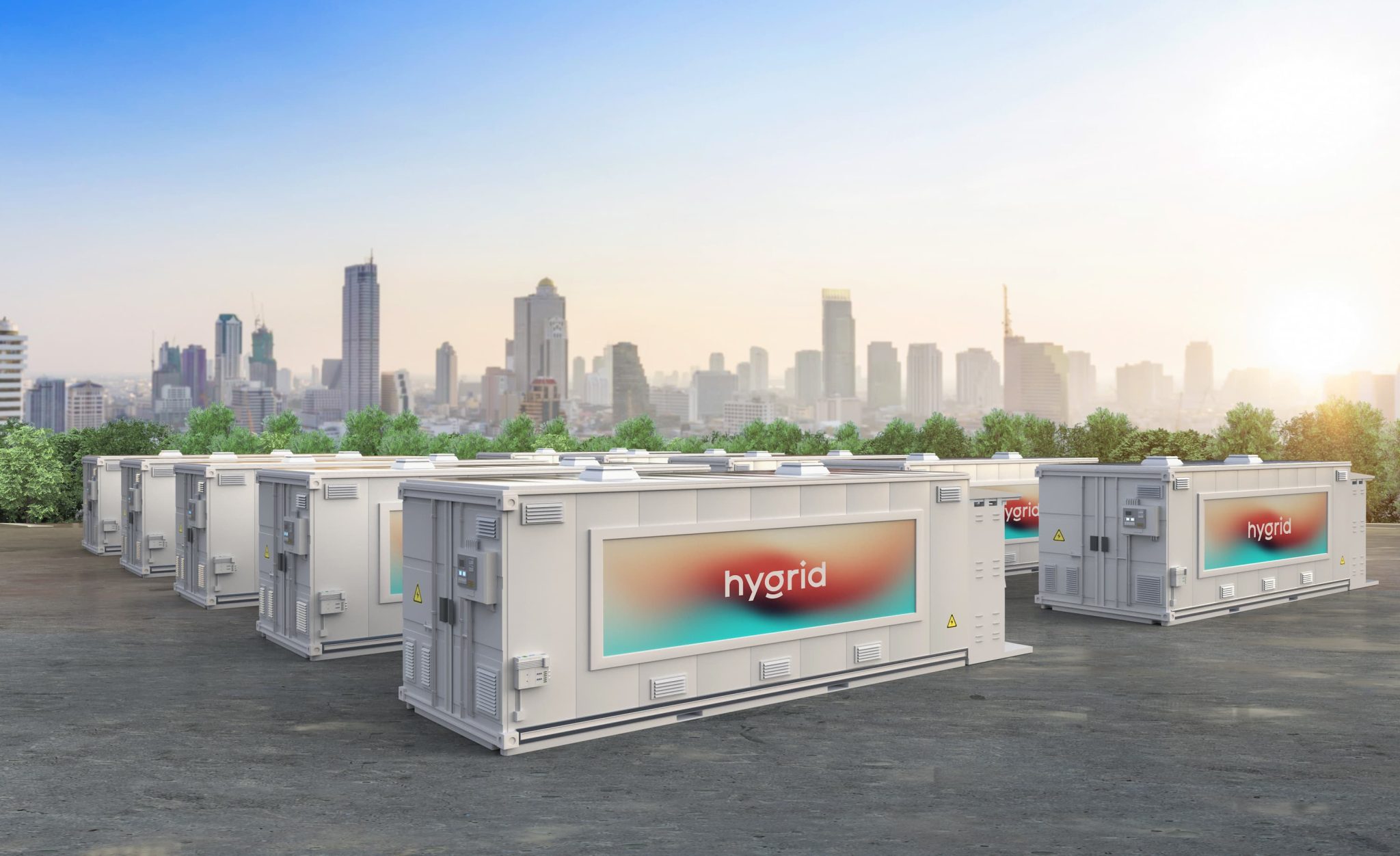
A containerised 60 kW plant on your site, delivered as Power-as-a-Service. You pay per kilowatt-hour, hygrid owns and operates the plant, and hygridOS runs it as one control plane for the whole fleet. The customer buys an outcome, not a machine.
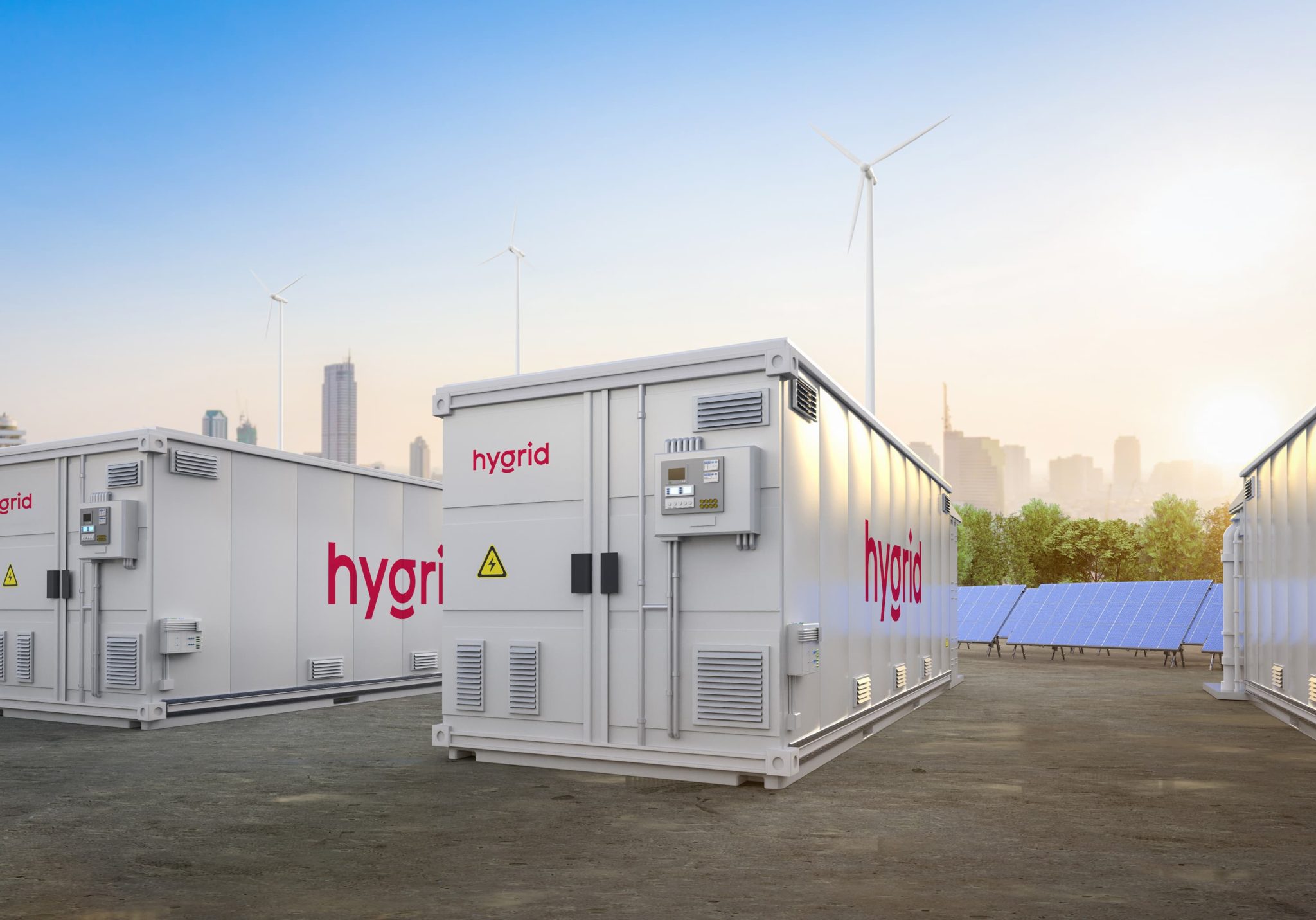
Gas in (natural gas or biomethane today, hydrogen as it arrives) goes through a reformer into a solid-oxide stack: electrochemical conversion, no combustion, no moving parts. Above 55% net electrical efficiency, around 85% with heat recovery, so the plant delivers the same output as grid power plus a gas boiler for roughly half the fuel. We are an independent power producer, technology agnostic: we own the physics (integration, certification, operation) and hygridOS.
The stack we integrate is proven at TRL 8 to 9 and has been running in the field for years. What this phase proves is the assembly: balance of plant, controls and hygridOS, validated on a micro test-bed unit from December 2026 while the first 60 kW components are on order. Four years inside the system, and UK policy on community and local clean power is catching up with what we built.
Distributed, dispatchable power in the 100 kW to 1 MW band with heat recovery, the segment the large players don't serve. Standardised since 2022 and applied consistently, from UK defence to European industrial consortia. To the grid, every hygrid site is a flat, continuous reduction in demand: no new peak, no reinforcement, no queue.
Get involvedA hygrid PowerPlant is a containerised 60 kW solid oxide fuel cell (SOFC) plant that sits on your site. Gas comes in (natural gas or biomethane today, hydrogen as it arrives) and passes through a reformer that prepares the fuel for the solid-oxide stack. The stack then converts it electrochemically, not by burning it: no combustion, no moving parts. The result is electricity at above 55% net electrical efficiency, plus recovered heat that lifts total efficiency to around 85%. Because the plant produces both power and heat from the same fuel, it delivers the same output as grid electricity plus a gas boiler while using roughly half the fuel.
The plant is fuel-flexible by design. Today it runs on natural gas from the existing grid or on biomethane for a fully renewable route, for example on a community-owned anaerobic digestion plant. As hydrogen becomes available, the same plant can take it without replacement. That is the point of the architecture: the customer is never locked into one fuel, and the machine gets cleaner as the fuel supply does.
Yes, when engineered to modern standards, and our design treats safety as a certification problem, not a promise. The plants are developed under a formal safety case (HAZOP and FMEA analysis, HSE compliance to British Standards) with certified gas handling, leak detection and automatic shutdown. Certification is routed through established bodies such as Kiwa, DNV and RINA-UK for UKCA and CE marking, so every unit is signed off against the same standards as any other industrial gas equipment on a commercial site.
hygridOS is the operating system that runs every hygrid unit as one fleet. Each plant ships with the same data interface, controls and operating map, connected through a unified namespace, so every machine in the estate learns from every other machine. It monitors performance in real time, tunes operation, balances supply and demand across sites, and gives customers one place to see what their energy is doing. One fleet, one learning estate.
It means the customer buys an outcome, not a machine. One unit, one contract, one operating system: the plant sits on your site, hygrid owns and operates it through a ring-fenced structure, and you pay per kilowatt-hour delivered. It works like a utility, except the power plant is yours and on-site. There is no capital outlay for the hardware, no maintenance burden, and no technology risk on your side.
Organisations that need clean, continuous power and cannot wait years for a grid connection: hospitals and healthcare estates, industrial sites, depots and logistics hubs, data-driven facilities, and community energy projects. Anywhere a high-voltage grid connection would take 5 to 15 years, an on-site plant delivers power in months, and communities can own a stake in their own energy through the same structure.
Because the queue is the problem. Demand waiting for a grid connection is measured in the hundreds of gigawatts, and new connection dates land in the 2030s. A hygrid site sidesteps the queue entirely: the plant generates where the power is used. To the grid, a hygrid site looks like a flat, continuous reduction in demand, with no new peak, no reinforcement needed, and no dependence on a connection date you cannot control.
The solid-oxide stack we integrate is a proven European product running at technology readiness level 8 to 9, with years of field operation behind it. What hygrid proves is the assembly around it: the balance of plant, the controls and hygridOS. Our scientific adviser, Professor Robert Steinberger-Wilckens, has run the configuration repeatedly on his rigs, and from December 2026 hygridOS is validated on a micro test-bed unit while the first 60 kW components are on order.
We are looking for early adopters with a site that needs power, community energy groups, and partners who want to build this with us. Every project starts the same way: a feasibility study. We survey your site, model your heat and power demand, and build the business case together, with a joint go/no-go at the end. No machine, no capital commitment. Use the contact page to tell us about your site or your interest.