
The article addresses challenges in renewable energy generation, workforce growth and how hygrid is on a mission to train engineers from rural India and other backgrounds that may have yet to have a fair chance of exposure. The article also highlights the new era of Industrial Digital 4.0 controls that would enable prompt the ChatGPT era of questioning the machines. hygrid operates in the UK and India.
Table of contents
-
hygrid introduction, our mission and product with cutting edge Digital 4.0 controls with ChatGPT type prompt enabled machine how we believe in a Blue Ocean product strategy to help other entrepreneurs to build highly efficient renewable energy plants.
-
Scaling challenges with the workforce and how to train them for exposure with integrity, values, and a roadmap.
-
We discuss rural development challenges as India scales its manufacturing and Renewable Energy ambitions.
-
Empowering students who cannot showcase their innovation ability due to not scoring in closed-book exams or formal education. The percentage marks do not define your ability to do good and change the world. The brand name enables and opens doors; I wish to provide the necessary tools and exposure and even train technicians with Digital 4.0 controls and Renewable Energy Engineering starting from our pilot project in the Konkan Region of Maharashtra, India.
1. Introduction
We are a startup in a Renewable Energy space emphasising making this Pale Blue Dot – Planet Earth as we know more habitable by delivering clean electricity and organic fertiliser for food production.
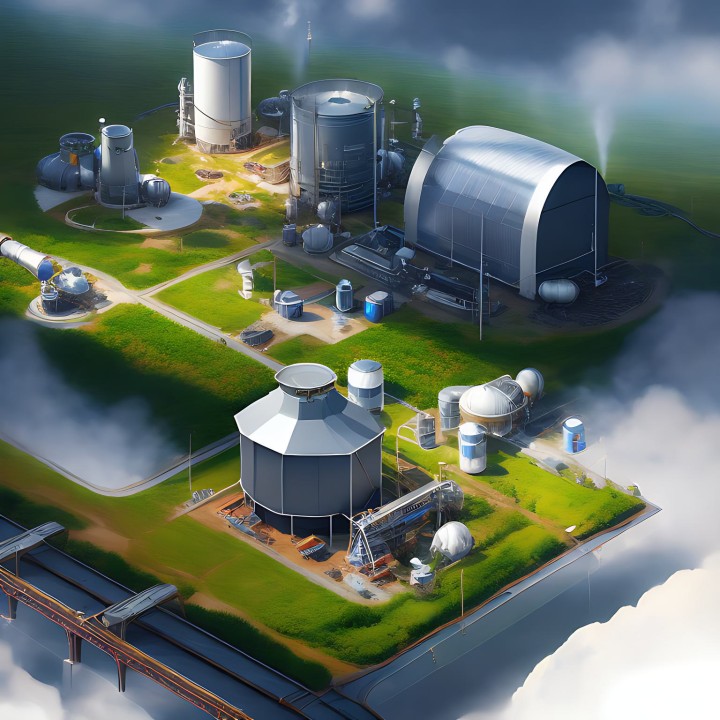
We are building a containerised plug & play Biogas/Hydrogen Plant; whilst the technology is being developed in the UK, we aim to manufacture in India. Our goal is to increase efficiency by 100% with digital 4.0 controls. The product will help existing biogas plants and could be customised to help other projects and entrepreneurs already developing microgrids. The product is currently in a design phase in London, UK and will be manufactured in India. We aim to deploy renewable energy, build Microgrids and improve access to water, electricity, and the Internet.
We also aim to help rural villages develop their workforce to address the foundational challenges mentioned below and provide exposure, tools, and counselling to eventually transform India and the rest of the world into a greener, more habitable place. It starts with education.
2. Scaling challenges for Renewable Energy and other Industrial Engineering firms due to staff shortages.
The challenge is that renewable energy and other engineering industries will need trained technicians to scale as the world takes notice of India’s democratic ways of dealing with supply chain issues and building manufacturing Industries to sustain world demand for products.
A culture shift is required. I have highlighted three current approaches i.e. IITs, Engineering colleges and ITI, to engineering education and their limitations.
In India, IITs [Indian Institute of Technology] are reputed institutions that everyone wants to get into; once the first attempt is failed, parents with money will pay up in donations to get into private Engineering Institutions. Then comes the third approach, the students who have scored less percentages; these students get enrolled in an institution known as ITI [Industrial Training Centres], which trains technicians. ITI is a great initiative; the Diploma, MTech, and several other Tech domains also fall into the third approach. There may be several other approaches, but mostly all parents will put their foot down and apply that pressure for the first approach.
The right exposure to the process involved in acquiring knowledge and leadership /mentorship is absent, with no motivation or understanding of where these students will eventually build their careers. Most of us, including me, scored far lower even to be considered for a private engineering college. Also, for students who are not closed-book exam experts, the culture could demotivate them to think their future could be better.
I say this from my experience growing up in the outskirts of Mumbai; I found this so demotivating that I eventually dropped out of an Engineering College in Mumbai; I believe several thousand students are in the same boat due to economic, personal, and other conditions. I strongly believe that acquiring knowledge and experience needs to be accessible to everyone.
If you have read until here, well done. So that you know, you may be a student who is good at a subject that will change the world, as we all are not good at everything and need to learn to understand what we are good at and what we love. But how to discover that?
Three things. The below is not a quick McDonald’s or KFC burger solution known as instant gratification. The below emphasises delayed gratification and building relationships, knowledge and following a process.
a) Identify & network with a leader/person you want to become and who matches closely with the future you wish to build. Who puts the smartphone aside and listens?
b) Read their articles, process, read books referred by them, turn up to their events and ask them: If I am good at this subject and I would love to work in this field, where will I be able to gain more knowledge and work experience?
c) Execute. Negative feedback is key. Get up and do it again. If you genuinely put in those hours to learn, turn up and do things, it will take 5-8 years to get there.
3. Foundational problems we are addressing through hygrid
Electricity and the Internet; The grid losses in India and worldwide are greater than 40%, which means transporting electricity large distances to the cities involves “transmission losses”. Our solution, being Microgrids at strategic locations where transmission losses are high, could help several towns with jobs. The logistical infrastructure, i.e., the highways, will enable more microeconomies to flourish around these towns. If you look closely in the UK, the villages are the crown of idyllic settings where logistical infrastructure allows people to think it is possible to commute easily and do business transferring goods.
Mobile data usage and not Wi-Fi; The Internet courses are great value addition, but will the young students access the Internet with the necessary bandwidth? I am not advocating the Edtech [Educational Technology] Apps and their subscriptions as they fall into the category of being able to afford the subscription. Our agenda is to enable education by enabling the foundational principles, providing options for future technology, and providing exposure to the new AI, ChatGPT era of Industrial automation, and physical assets in the Renewable Energy domain.
The 5G internet, ChatGPT era will enable many opportunities in the Industrial space. These courses will consume data on a mobile or a laptop. Now the culture in rural villages in India is to buy data packages and not have Wi-Fi. In the UK, we get sold on unlimited data deals, phone contracts and several free Wi-Fi hotspots; we sometimes take things like running water, stable electricity supply and Internet access granted. The world is changing fast due to innovative firms that would beam internet through satellites blanketed just above Earth’s atmosphere. Even ISRO, through the Indian Govt, plans to beam internet through space. Indian firms such as Airtel and their One Web equity, together with UK Govt, Amazon, and SpaceX, are currently at the forefront of the internet for all [of course, it won’t be free]. The competition will enable cheaper internet access at the same price as the current data packages. We advocate providing direction and not teaching another course online.
The second problem is that we are not just visual learners, so watching videos through WhatsApp, YouTube, and other platforms can spark an interest; however, unless you “execute” that particular task with Pen & Paper, physically visit the site, play around with the product, fail, practically experiencing the phenomena, it will be hard to become the master of the trade.
We plan to innovate with physical machines in the Renewable Energy domain and utilise the latest technology; the difference is that we will share the knowledge through open-source channels such as the discord server. If you are passionate and keen to solve problems, does an engineering degree the only way? Not really, but exposure to future technology trends and diving deeper with discipline, hard work, and embracing failure “trial& error & jugaad will help 1000s of villages build a better future.
My goal as a founder is not to be another influencer but to do it and build a community of knowledge-sharing and develop engineers who know what problem-solving means. It is an iterative journey, so let us start by asking the right questions and learning what is more meaningful to you. Our views and blog articles will enable you to evaluate yourself, identify your interests and get into a working environment to do good. If you are super organised, build a personalised growth plan.
Start with What do you want to become? What is your purpose in life, and what problem do you wish to solve?